


Your Free Credit Score with Credit Karma Explained: A Beginner's Guide
Understanding your credit score is a fundamental step toward financial wellness, but the process can seem complicated and costly. Many people wonder if it's possible to get a truly free credit score with Credit Karma, and the answer is yes. This service provides regular access to your credit information from two major bureaus without requiring a credit card, helping you monitor your financial health, spot potential issues, and work toward your goals.
This guide breaks down everything you need to know. We'll cover how Credit Karma works, what information it provides, and how you can use its tools to build a stronger financial future. Whether you're aiming to buy a home, get a new credit card, or simply understand where you stand, this is your starting point.
What to Know
- Completely Free Access: Credit Karma provides your credit scores and reports from Equifax and TransUnion at no cost. They make money through targeted financial product recommendations.
- VantageScore 3.0 Model: The scores you see are based on the VantageScore 3.0 model, which may differ from the FICO scores many lenders use. However, the underlying data is the same, making it an excellent tool for tracking your overall credit health.
- No Impact on Your Score: Checking your credit score and report on Credit Karma is a "soft inquiry," which means it does not affect your credit score in any way. You can check as often as you like.
- More Than Just a Score: The platform offers valuable tools, including credit monitoring alerts, a credit score simulator, and personalized insights to help you understand the factors impacting your score.
What Is a Credit Score and Why Does It Matter?
A credit score is a three-digit number, typically ranging from 300 to 850, that represents your creditworthiness. Think of it as a financial report card for lenders. A higher score indicates to banks, credit card companies, and other financial institutions that you are a lower-risk borrower, making them more likely to approve you for loans and offer you better interest rates.
This single number has a significant impact on your life. It can determine whether you're approved for a mortgage, an auto loan, or a new credit card. Landlords often check credit scores before approving rental applications, and some insurance companies even use credit information to set premiums. A strong credit score can save you thousands of dollars over your lifetime in the form of lower interest payments.
Credit scores are calculated using information from your credit reports, which are maintained by three major credit bureaus: Equifax, TransUnion, and Experian. The calculation focuses on five key factors:
- Payment History (35%): This is the most important factor. It tracks whether you've paid your past credit accounts on time.
- Amounts Owed / Credit Utilization (30%): This measures how much of your available credit you're using. Keeping this ratio low is crucial.
- Length of Credit History (15%): A longer history of responsible credit management generally leads to a higher score.
- Credit Mix (10%): Lenders like to see that you can manage different types of credit, such as credit cards (revolving credit) and loans (installment credit).
- New Credit (10%): This factor considers how many new accounts you've opened recently and how many hard inquiries are on your report.
How Credit Karma Provides Your Free Credit Score
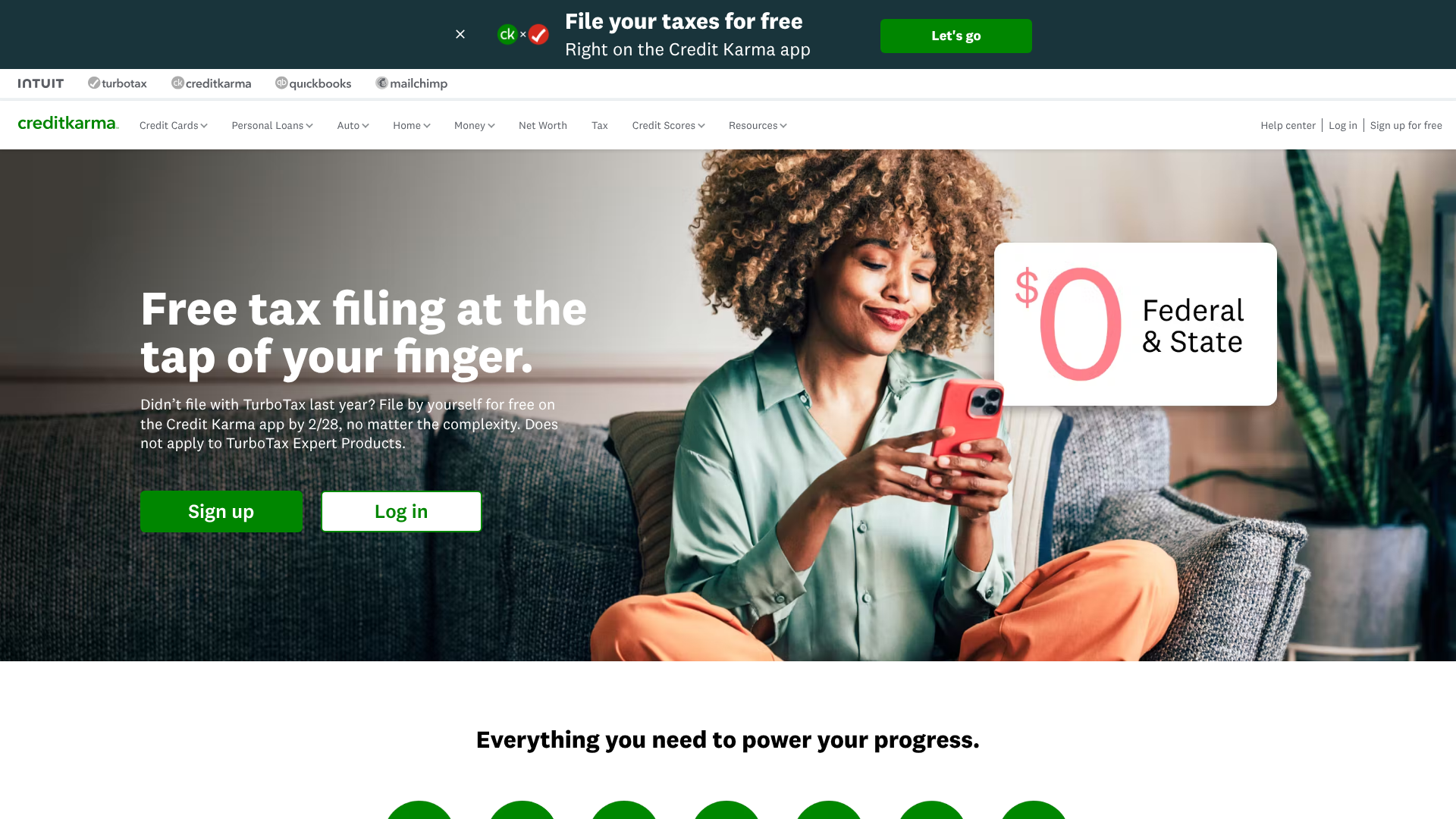
Many people are skeptical when they hear "free," but Credit Karma's business model is straightforward and doesn't involve hidden fees or selling your personal data to third parties. The service is genuinely free for consumers. Credit Karma makes money through partnerships with financial institutions.
Here’s how it works: When you sign up, Credit Karma analyzes your credit profile. Based on your score and financial history, the platform shows you personalized offers for credit cards, personal loans, auto loans, and other financial products. If you apply for and are approved for one of these products through Credit Karma, the partner bank or lender pays Credit Karma a referral fee.
This model creates a win-win situation. You get free access to your credit information and tools, and financial institutions get to market their products to consumers who are more likely to qualify for them. You are never obligated to apply for any of the recommended products. You can use the platform solely to check your credit score for free and monitor your reports.
Credit Karma provides you with your VantageScore 3.0 credit scores and reports from two of the three major bureaus, Equifax and TransUnion. This gives you a broad view of your credit health, as lenders may pull your report from any of the three bureaus.
Step-by-Step: How to Sign Up and Check Your Score for Free
Getting started with Credit Karma is a simple process that takes only a few minutes. Here’s a step-by-step guide to signing up and accessing your financial information.
-
Visit the Website or Download the App: Go to the official Credit Karma website or download the mobile app from the Apple App Store or Google Play Store. The platform is accessible from both desktop and mobile devices.
-
Create Your Account: You'll be asked to provide your email address and create a password. This will be your login information for future access.
-
Provide Personal Information: To verify your identity and pull your credit reports, Credit Karma needs some personal details. This includes your full name, address, date of birth, and the last four digits of your Social Security number (SSN). This information is used solely to match you with your credit files at Equifax and TransUnion.
-
Answer Security Questions: You will be asked a few multiple-choice questions to confirm your identity. These questions are generated from your credit report data (e.g., "Which of the following addresses have you been associated with?"). This is a standard security measure to ensure no one else can access your information.
-
Access Your Dashboard: Once your identity is confirmed, you'll be taken to your personalized dashboard. Here, you'll immediately see your Credit Karma score from both TransUnion and Equifax, along with a summary of the key factors influencing your scores.
Pro Tip: Set up credit monitoring alerts during the sign-up process. Credit Karma will notify you via email or push notification of any significant changes to your credit reports, such as new accounts being opened or hard inquiries appearing. This is a powerful tool for early detection of identity theft.
The Key Benefits of Regularly Monitoring Your Credit

Checking your credit score once a year is good, but actively monitoring it offers far greater benefits for your financial well-being. Regular monitoring empowers you to take control of your credit and can protect you from potential harm. Here are some of the most significant advantages.
First, it helps you detect and prevent identity theft. Fraudsters can use your personal information to open new accounts in your name, which can devastate your credit. By monitoring your report, you can spot unauthorized accounts or inquiries as soon as they appear and take immediate action to shut them down. Credit Karma's alerts make this process nearly effortless.
Second, it allows you to identify and correct errors. Credit reports are not always perfect; studies have shown that errors are surprisingly common. A mistake, such as a payment incorrectly reported as late or an account that doesn't belong to you, could be dragging your score down. Regularly reviewing your report helps you catch these errors and dispute them with the credit bureaus.
Finally, consistent monitoring helps you track your progress toward financial goals. If you're working to improve your score to qualify for a mortgage or a car loan, seeing your score change over time can be highly motivating. It also helps you understand the real-world impact of your financial decisions, like paying down a credit card balance or opening a new loan.
Decoding Your Credit Karma Report: A Practical Guide
Your Credit Karma dashboard presents a wealth of information that goes far beyond just a three-digit number. Understanding how to read and interpret your full credit report is essential for managing your financial health. Here's a breakdown of the key sections you'll find.
1. Credit Score Factors: The dashboard provides a simple, color-coded overview of the six main factors influencing your score: credit card utilization, payment history, derogatory marks, age of credit history, total accounts, and hard inquiries. Each factor is graded from excellent to poor, showing you exactly where you're doing well and where you need to improve.
2. Credit Accounts: This section lists all your open and closed credit accounts, including credit cards, student loans, mortgages, auto loans, and personal loans. For each account, you can see the creditor's name, the account balance, your credit limit, and your payment history for the last two years. Review this section carefully to ensure all accounts are yours and the reported information is accurate.
3. Derogatory Marks: This is where you'll find any negative items that significantly harm your credit score. This includes things like collections, bankruptcies, foreclosures, or repossessions. These items typically stay on your report for seven to ten years, so it's crucial to know if any are present.
4. Hard Inquiries: This section lists every time a lender has pulled your credit report when you've applied for new credit. Too many hard inquiries in a short period can lower your score, as it may suggest to lenders that you're in financial distress. Soft inquiries, like checking your own score on Credit Karma, are also tracked but are only visible to you and do not affect your score.
Credit Karma Score vs. FICO Score: What's the Difference?

One of the most common questions users have is why their Credit Karma score might be different from the score a lender shows them. The reason is that there are multiple credit scoring models, and Credit Karma and most lenders use different ones. Credit Karma provides a VantageScore 3.0, while the majority of lenders use a version of the FICO score.
Both FICO and VantageScore were developed to predict a borrower's likelihood of repaying a debt. They use the same underlying data from your Equifax, TransUnion, and Experian credit reports, but they weigh the five key credit factors slightly differently in their algorithms. This can result in a score that differs by a few points.
Here’s a simple comparison:
| Feature | Credit Karma (VantageScore 3.0) | FICO Score |
|---|---|---|
| Data Source | Equifax & TransUnion | Equifax, TransUnion, or Experian |
| Usage | Widely used for consumer education | Used by over 90% of top lenders |
| Cost | Free for consumers | Typically requires a fee or is offered by a bank |
| Score Range | 300-850 | 300-850 |
| Key Focus | Excellent for monitoring trends and report data | The industry standard for lending decisions |
So, which one is more "accurate". It's the wrong question to ask. Both are accurate calculations based on their respective models. The most important thing is not the exact number but the information on your credit report that generates the score.
If you maintain a good payment history, keep your balances low, and manage your credit responsibly, both your VantageScore and your FICO score will be strong.
Actionable Tips to Improve Your Credit Score Using Credit Karma's Insights
Credit Karma is more than just a place to see your score; it's a tool you can use to actively improve it. The platform's insights can guide you toward making smarter financial decisions. Here are some actionable tips to boost your score using features available on Credit Karma.
1. Lower Your Credit Card Utilization: Credit Karma clearly displays your utilization ratio for each credit card and your overall average. If your utilization is high (generally above 30%), focus on paying down the balances. The platform often shows how much your score could increase if you lower your utilization to a certain level.
2. Never Miss a Payment: Your payment history is the biggest factor in your score. Use Credit Karma's account overview to see due dates for your linked accounts. Better yet, set up automatic payments with your creditors for at least the minimum amount to ensure you're never late.
3. Use the Credit Score Simulator: This powerful tool lets you see the potential impact of certain financial actions before you take them. You can simulate what might happen to your score if you pay off a credit card, take out a new loan, or let an account go to collections. Use this to make informed decisions that will help, not hurt, your credit.
4. Dispute Inaccuracies with Direct Dispute™: If you find an error on your TransUnion credit report, Credit Karma offers a tool called Direct Dispute™ that allows you to file a dispute directly from their platform. This simplifies the process of correcting errors that could be unfairly lowering your score.
Pro Tip: Don't close old credit card accounts, even if you don't use them often. The age of your credit history is a key factor in your score. Closing an old account shortens your credit history and reduces your total available credit, which can increase your utilization ratio and lower your score.
Debunking Common Myths About Credit Scores and Credit Karma
Misinformation about credit scores is widespread. Believing these myths can lead to poor financial decisions that harm your credit. Let's debunk some of the most common ones.
Myth 1: Checking your own credit score hurts it.
This is perhaps the most persistent myth. When you check your credit score for free on a platform like Credit Karma, it results in a "soft inquiry." Soft inquiries are only visible to you and have zero impact on your score. A "hard inquiry" occurs when a lender checks your credit after you apply for a loan or credit card, and these can cause a small, temporary dip in your score.
Myth 2: You only have one credit score.
In reality, you have many different credit scores. Not only are there scores from each of the three bureaus (Equifax, TransUnion, Experian), but there are also different scoring models (FICO, VantageScore) and industry-specific versions (like FICO Auto Scores or FICO Bankcard Scores). It's normal for your scores to vary slightly across different platforms.
Myth 3: Carrying a small balance on your credit card helps your score.
This is completely false. You do not need to carry a balance and pay interest to build a good credit score. Paying your statement balance in full every month is the best practice. It demonstrates responsible credit management and keeps your credit utilization low, both of which are great for your score.
Myth 4: Closing old credit cards will improve your score.
Closing a credit card, especially an old one, can actually hurt your score. It reduces your overall available credit, which can instantly increase your credit utilization ratio. It also shortens the average age of your credit accounts. Unless the card has a high annual fee you can't afford, it's usually better to keep it open and use it sparingly.
Frequently Asked Questions
Here are answers to some of the most common questions people have about getting a free credit score with Credit Karma.
What's more accurate, Credit Karma or FICO score?
Neither score is more "accurate" than the other; they are just different. Both VantageScore (used by Credit Karma) and FICO are legitimate scoring models that use the same data from your credit reports. FICO is used by more lenders for credit decisions, so the score a lender pulls may be closer to a FICO score. However, your Credit Karma score is an excellent indicator of your overall credit health, and the trends you see on Credit Karma will almost always align with the trends in your FICO scores.
How quickly can I get my credit score from 500 to 700?
Improving a credit score by 200 points is a significant achievement that takes time and consistent effort. There is no magic bullet. For most people, moving from 500 to 700 will likely take anywhere from 12 to 24 months of diligent credit management. The key is to focus on the fundamentals: make all payments on time, pay down high-balance credit cards to lower your utilization, and avoid opening too many new accounts at once.
Disputing any errors on your report can also provide a boost.
How can I increase my credit score by 100 points in 30 days?
While a 100-point increase in 30 days is highly unlikely for most people, it's not entirely impossible under specific circumstances. The fastest way to see a significant jump is by drastically reducing your credit utilization. For example, if your credit cards are maxed out and you pay them down to below 10% utilization, you could see a substantial score increase once the new balances are reported. Another potential quick fix is having an error, like a collection account that isn't yours, removed from your report.
How far off is Credit Karma from your actual credit score?
The difference between your Credit Karma (VantageScore) and your FICO score can vary, but it's common to see a difference of 20 to 50 points. This variance is due to the different algorithms each model uses. Instead of fixating on the exact number, focus on the score range you fall into (e.g., poor, fair, good, excellent) and the underlying factors on your credit report. If your report is healthy, both scores will reflect that.
Final Thoughts: Is Credit Karma Right for You?
For anyone looking to understand, monitor, and improve their financial health, Credit Karma is an invaluable resource. It demystifies the world of credit by providing free, regular access to your scores and reports from two major bureaus. The platform's user-friendly interface, credit monitoring alerts, and educational tools empower you to make smarter financial decisions without costing you a dime.
While the VantageScore it provides may differ from the FICO score a lender uses, its value lies in tracking your progress and understanding the factors that shape your creditworthiness. By using the insights from Credit Karma to build positive financial habits, you put yourself in a stronger position to achieve your long-term goals.
Ready to take the first step toward mastering your credit? You can sign up and get your free credit score with Credit Karma in just a few minutes and begin your journey to better financial health today.