


Monarch vs Rocket Money: Which Budget App Fits Your Wallet in 2026?
Choosing the right budgeting app can feel like picking a financial partner. You need one that understands your goals, speaks your language, and ultimately helps you build wealth. In the crowded field of personal finance tools, the debate over monarch vs rocket money has become a central topic, especially for those seeking a powerful replacement for Mint. Both platforms offer a modern approach to money management, but they cater to very different needs and philosophies.
Monarch Money positions itself as a comprehensive financial dashboard, a command center for users who want to see everything—from spending and budgets to investments and net worth—in one highly customizable space. On the other hand, Rocket Money focuses on a more action-oriented approach, excelling at identifying and cutting unnecessary expenses, canceling subscriptions, and negotiating bills on your behalf. This article provides a detailed monarch money comparison to help you decide which tool is the right fit for your financial life.
In a Nutshell
- Best for Overall Financial Control: Monarch Money offers a superior all-in-one platform with deep customization, robust investment tracking, and collaborative features for couples or families.
- Best for Cutting Expenses: Rocket Money is the clear winner for users whose primary goal is to find and eliminate wasteful spending through its automated subscription cancellation and bill negotiation services.
- Pricing Philosophy: Monarch is a premium, ad-free subscription service. Rocket Money operates on a freemium model, with its most powerful savings features available in the paid version.
- User Type: Monarch is built for the hands-on financial planner who loves data and detailed analysis. Rocket Money is ideal for the user who wants automated help to plug spending leaks with minimal effort.
Monarch vs. Rocket Money: At a Glance
| Feature | Monarch Money | Rocket Money |
|---|---|---|
| Primary Focus | All-in-one financial dashboard, net worth tracking | Expense reduction, subscription management |
| Free Version | No (Free trial available) | Yes (Limited features) |
| Pricing | Premium Subscription | Freemium & Premium Tiers |
| Subscription Cancellation | No (Manual tracking only) | Yes (Automated service) |
| Bill Negotiation | No | Yes (Concierge service) |
| Investment Tracking | Advanced, with detailed views | Basic, focused on net worth |
| Customization | High (Customizable dashboard, rules, categories) | Low (Standardized interface) |
| Collaboration | Yes (Invite a partner or advisor) | No |
| Ad-Free Experience | Yes | No (In the free version) |
An Overview of the Contenders: Monarch Money and Rocket Money
Before diving into the granular details, it's important to understand the core philosophy behind each app. They were built to solve different problems, which explains why their feature sets diverge so significantly.
Monarch Money: The Financial Command Center
Monarch Money was created by a team of ex-Intuit employees who saw a gap in the market after Mint's development slowed. Their goal was to build a modern, comprehensive financial platform for users who want a complete picture of their financial health. It's designed to be an all-in-one solution that connects to all your accounts—checking, savings, credit cards, loans, and investments—to give you a real-time view of your net worth.
The platform emphasizes customization and control. You can create custom budgets, set up detailed rules to automatically categorize transactions, and design a dashboard that shows you the exact data points you care about most. Monarch operates on a subscription-only model, which means you get a clean, ad-free experience without any pressure to sign up for other financial products. It's built for the user who wants to be in the driver's seat of their financial journey.
Rocket Money: The Automated Savings Assistant
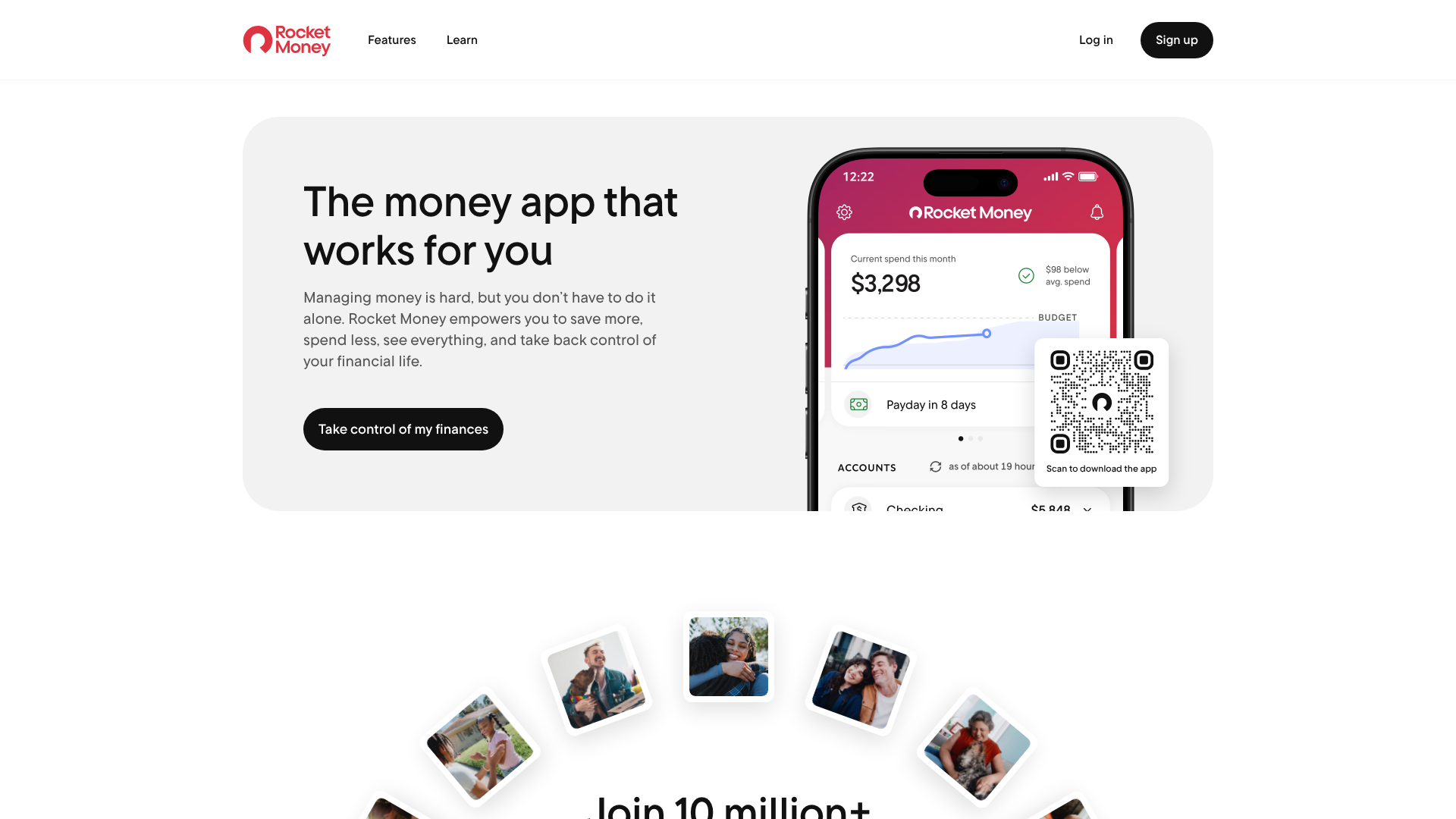
Rocket Money (formerly known as Truebill) started with a much more specific mission: to help users find and cancel unwanted subscriptions. This core feature remains its biggest strength. The app scans your transaction history to identify recurring charges, making it incredibly easy to see where your money is going each month and cancel services you no longer use with a single tap.
Over time, Rocket Money has expanded its services to become a broader financial wellness app, but its DNA is still rooted in actively saving you money. Its standout features, like bill negotiation and subscription management, are proactive. Instead of just showing you data, Rocket Money takes action on your behalf to lower your bills and cut waste. It appeals to users who feel overwhelmed by their expenses and want a tool that does the heavy lifting for them.
Key Features: A Head-to-Head Monarch Money Comparison
When you compare the features side-by-side, the different priorities of each app become crystal clear. The rocket money vs monarch decision often comes down to which of these feature sets aligns with your primary financial goal.
Subscription Management: Rocket Money's Signature Service
This is where Rocket Money has a significant advantage. Its system automatically detects recurring payments from your bank and credit card statements, listing them all in one convenient dashboard. You can see everything from your Netflix subscription to that gym membership you forgot about. If you spot a service you no longer need, you can ask Rocket Money's concierge team to cancel it for you.
This hands-off process is a major draw for users who dread navigating cancellation phone trees and web forms.
Monarch Money, in contrast, can help you identify recurring transactions, but it doesn't offer a cancellation service. You can set up rules to tag subscriptions, but the actual work of canceling them is left to you. For users focused squarely on trimming their monthly overhead, Rocket Money's automated approach is far superior.
Bill Negotiation: An Automated Savings Tool
Another unique feature of Rocket Money is its bill negotiation service. You can submit bills for services like cable, internet, or cell phone service, and their team of experts will attempt to negotiate a lower rate with the provider on your behalf. They take a percentage of the annual savings they secure for you, so you only pay if they succeed.
This is a powerful tool for passive savings that Monarch Money does not offer. It's a service that actively puts money back into your pocket without requiring you to spend hours on the phone with customer service. This feature alone can often justify the cost of a Rocket Money Premium subscription.

Dashboard & Customization: Monarch's Powerhouse
While Rocket Money wins on automated savings, Monarch Money dominates in data visualization and customization. Monarch’s dashboard is a clean, modern, and highly flexible interface that you can tailor to your specific needs. You can add, remove, and rearrange widgets for spending, net worth, investments, budgets, and financial goals.
Furthermore, Monarch’s transaction rules are far more powerful. You can create complex rules to automatically rename, categorize, or even hide transactions from certain merchants. This level of control allows you to fine-tune your financial data until it's a perfect reflection of your reality. Rocket Money's interface is functional and easy to navigate, but it offers very little in the way of customization, presenting a one-size-fits-all view.
Reporting & Analytics: Depth vs. Simplicity
Monarch provides detailed reports and charts that let you analyze your cash flow, spending trends, and net worth over time. You can filter by date range, account, or category to get deep insights into your financial habits. This is ideal for users who want to understand the 'why' behind their numbers.
Rocket Money's reporting is much more basic. It provides a simple overview of your spending and income but lacks the depth and filtering capabilities of Monarch. Its reports are sufficient for a quick check-in but won't satisfy a user who loves to dig into financial data.
User Experience and Interface: Navigating Your Finances
The look and feel of a budgeting app can greatly influence how often you use it. Both Monarch and Rocket Money offer modern, mobile-friendly experiences, but they are designed with different users in mind.
Monarch’s user interface is clean, intuitive, and visually appealing. It uses Sankey diagrams and waterfall charts to make complex financial data easy to understand at a glance. The experience feels premium and data-driven, almost like a personal version of a business intelligence dashboard. It's designed for clarity and comprehensive oversight, encouraging you to explore your financial data.
Rocket Money's interface is more task-oriented and straightforward. The design is simple and functional, guiding you directly to its core features like subscription management and spending overviews. While it may not be as visually sophisticated as Monarch, it's incredibly easy to use, especially for beginners who might be intimidated by too many charts and graphs. The focus is less on deep analysis and more on taking quick, decisive action to save money.

Pro Tip: When testing both apps during their free trials, pay close attention to the transaction categorization. Monarch's powerful rules engine can save you a lot of manual correction time in the long run if you're willing to set it up initially. Rocket Money's categorization is good but less flexible.
Pricing Breakdown: Monarch vs Rocket Money Cost Analysis
Pricing is a critical factor in any monarch vs rocket comparison, as the two apps have fundamentally different business models.
Monarch Money's Subscription Model
Monarch Money is a premium product with a straightforward pricing structure. It does not have a free version, but it offers a free trial (typically 7 days) for new users to test the platform. After the trial, you must subscribe to continue using the service.
As of late 2025, the pricing is typically around $14.99 per month or $99.99 per year for an annual plan. The key benefit of this model is that the product is the service. There are no ads, no upselling of third-party financial products, and their incentive is aligned with providing the best user experience possible to retain subscribers. You get access to all features with your subscription.
Rocket Money's Freemium and Premium Tiers
Rocket Money operates on a freemium model. You can download and use the app for free, which gives you access to basic features like account syncing, spending tracking, and subscription identification. However, its most valuable features are locked behind the Premium subscription.
To use the automated subscription cancellation service, bill negotiation, smart savings accounts, and other advanced tools, you need to upgrade. Premium pricing can vary, but it's typically a sliding scale from $4 to $12 per month, billed annually. It's important to remember that the bill negotiation service also charges a success fee (usually 30-60% of your first year's savings), which is separate from the subscription cost. Visit the Rocket Money website for the most current pricing information.
Budgeting Tools: Two Different Philosophies
How you want to budget is perhaps the most personal aspect of financial management. Here, the differences between the two apps are stark.
Monarch's Flexible, Goal-Oriented Budgeting
Monarch offers a highly flexible and traditional approach to budgeting. You can set monthly spending targets for different categories, and the app tracks your progress in real time. It uses a rollover system, where leftover or overspent funds from one month can be carried over to the next, which is great for managing irregular expenses.
Beyond simple category budgets, Monarch allows you to create and track specific financial goals. Whether you're saving for a down payment, a vacation, or retirement, you can link savings accounts to these goals and monitor your progress. This approach connects your daily spending habits to your long-term aspirations, providing powerful motivation.
Rocket Money's Automated, Category-Based Approach
Rocket Money's budgeting tools are simpler and more automated. The app automatically creates a budget for you based on your past income and spending habits. It sets spending targets for various categories and alerts you when you're approaching your limits.
While it's less customizable than Monarch, its simplicity is a benefit for users who are new to budgeting or prefer a more hands-off system. The focus is on preventing overspending in the current month rather than long-term financial planning. It's a solid tool for getting your spending under control, but it lacks the forward-looking goal features that make Monarch a true financial planning tool.
To see a direct comparison of the interfaces and features in action, this side-by-side test provides a helpful visual walkthrough:
Investment Tracking Capabilities
For users focused on building wealth and tracking their net worth, investment tracking is a non-negotiable feature. This is another area where Monarch has a distinct edge.
Monarch Money offers robust investment tracking. It connects to a wide range of brokerage accounts, 401(k)s, and even crypto exchanges like Coinbase. The dashboard provides a clear view of your portfolio's performance, holdings, and asset allocation. You can see how your investments are contributing to your overall net worth and track your progress toward retirement and other long-term goals.
It's not a replacement for a dedicated portfolio analyzer, but it's one of the best integrated tracking tools available in a budgeting app.
Rocket Money's investment tracking is much more basic. While you can connect your investment accounts, the app primarily uses this data to calculate your net worth. It doesn't provide detailed information on performance, allocation, or individual holdings. If your main goal is to simply see your total net worth number, Rocket Money is sufficient.
However, if you want to analyze and monitor your investment portfolio, Monarch is the far superior choice.
Customer Support: Who Has Your Back?
When you're dealing with sensitive financial data, knowing you can get help when you need it is crucial. Both companies offer customer support, but the accessibility and quality can differ.
Monarch Money offers support primarily through email and a help center with detailed articles. As a premium, paid-only service, users generally report responsive and helpful interactions. The focus is on providing quality support to its subscriber base. They also have an active community and a public roadmap where users can request features.
Rocket Money also offers email and in-app chat support. However, given its large user base that includes many free users, response times can sometimes be slower. Support for Premium members is prioritized. For services like bill negotiation and subscription cancellation, you are interacting with their concierge team, which is a specialized form of customer support.
Pros and Cons: The Quick Verdict
To simplify your decision, here’s a breakdown of the strengths and weaknesses of each platform.
Monarch Money: Pros & Cons
Pros:
-
All-in-One View: Truly comprehensive platform that tracks everything from spending to investments. – High Customization: Tailor the dashboard, categories, and transaction rules to your exact preferences. – Superior Investment Tracking: Detailed views of your portfolio performance and asset allocation. – Collaboration Features: Easily share your financial picture with a partner or financial advisor.
-
Ad-Free Experience: A clean, focused interface with no third-party product promotions.
Cons:
- No Free Version: Requires a paid subscription after the initial trial period.
- No Automated Savings Tools: Lacks features like bill negotiation or subscription cancellation.
- Steeper Learning Curve: The sheer number of features can be overwhelming for beginners.
Rocket Money: Pros & Cons
Pros:
- Excellent Subscription Management: The easiest way to find and cancel unwanted recurring charges.
- Bill Negotiation Service: Actively saves you money by negotiating lower rates on your behalf.
- Strong Free Version: The free tier is useful for basic expense tracking and identifying subscriptions.
- User-Friendly: Very simple and easy to navigate, making it great for budgeting newcomers.
Cons:
- Limited Customization: A one-size-fits-all approach that may not suit power users.
- Basic Investment Tracking: Only provides a high-level view of net worth, not portfolio details.
- Ads and Upsells: The free version includes promotions for other financial products.
- Fees for Savings: The bill negotiation service takes a percentage of the money it saves you.
User Reviews and Community Feedback
Real-world user experiences often provide the most valuable insights. Since the shutdown of Mint, many users have migrated to these two platforms, and their feedback is telling.
On platforms like Reddit, users frequently praise Monarch Money for being the most feature-complete Mint alternative. One user in the r/mintuit subreddit noted, "I've been able to add all my accounts (and properties) to Monarch. With Rocket Money, I wasn't able to add all the accounts I had on Mint." This highlights Monarch's superior account aggregation capabilities.
Conversely, users who praise Rocket Money often focus on its tangible results. They celebrate the hundreds of dollars saved through bill negotiations or the relief of easily canceling a service they'd been meaning to get rid of for months. The feedback centers on immediate, concrete financial wins rather than long-term data analysis.
Pro Tip: Read recent reviews in the App Store or Google Play Store. Pay attention to comments about account connection reliability, as this is a common pain point for all financial aggregator apps and can vary depending on the financial institutions you use.
The Future: What's Next for Monarch and Rocket Money?
Both apps are continuously evolving. Monarch Money maintains a public roadmap, showing a commitment to user-driven development. Recent updates have focused on improving investment tracking, reporting features, and expanding account connectivity. Their trajectory points toward becoming an even more powerful, all-encompassing financial hub.
Rocket Money, having been acquired by Rocket Companies, has significant resources behind it. Future developments will likely focus on deeper integration with the Rocket ecosystem (like Rocket Mortgage) and expanding its suite of automated savings tools. Their path seems focused on becoming a comprehensive financial wellness app that takes automated action to improve a user's financial situation.
FAQ: Your Questions on Rocket Money vs Monarch Answered
What's better than Rocket Money?
If you're looking for a tool that's better at comprehensive financial planning and detailed tracking, Monarch Money is a superior alternative. While Rocket Money excels at cutting expenses, Monarch provides a more holistic view of your finances, including in-depth investment tracking and highly customizable budgeting tools that Rocket Money lacks.
Is there anything better than Monarch Money?
For users who need an even more rigorous budgeting methodology, You Need A Budget (YNAB) is often considered a strong competitor. YNAB uses a zero-based budgeting system that forces users to assign a job to every dollar they earn. While Monarch is excellent for tracking and overview, YNAB is more of a hands-on, prescriptive system for gaining control over your spending.
Is Monarch Money worth it?
For individuals or couples who are serious about tracking their net worth, managing multiple financial goals, and analyzing their spending and investment data in detail, Monarch Money is absolutely worth the subscription fee. The ad-free experience, powerful customization, and all-in-one dashboard provide immense value for data-driven users.
What is the downside to Rocket Money?
The primary downside to Rocket Money is its lack of depth in budgeting and investment tracking. Its reporting is basic, and its budgeting tools are not as flexible as competitors like Monarch. Additionally, while its bill negotiation service is effective, the success fee can be high, and the free version of the app contains advertisements.
How safe is Monarch Money?
Monarch Money uses bank-level security to protect user data. It connects to your financial institutions using trusted third-party aggregators like Plaid and Finicity, which means Monarch never stores your bank login credentials on its servers. They also use read-only access, so the app cannot move money from your accounts.
Final Thoughts: Which App Should You Choose?
Ultimately, the Monarch vs Rocket Money decision isn't about which app is objectively "better," but which app is better for you. Your choice should align directly with your primary financial objective.
Choose Monarch Money if:
- You are a data-driven individual who wants a complete, 360-degree view of your finances.
- You want to track your net worth and investment portfolio in detail.
- You need highly customizable budgeting and reporting tools.
- You are managing finances with a partner and need collaborative features.
Choose Rocket Money if:
- Your main goal is to find and cut unnecessary spending and recurring subscriptions.
- You want an app that takes automated action to save you money through bill negotiation.
- You are new to budgeting and want a simple, user-friendly interface.
- You prefer a freemium model and only want to pay for specific, high-value features.
For those looking to actively reduce their monthly bills and get a handle on where their money is disappearing, Rocket Money offers a unique and powerful set of tools that can deliver immediate financial returns. For those seeking to build a comprehensive, long-term financial plan, Monarch Money provides the robust, detailed command center you need to succeed.